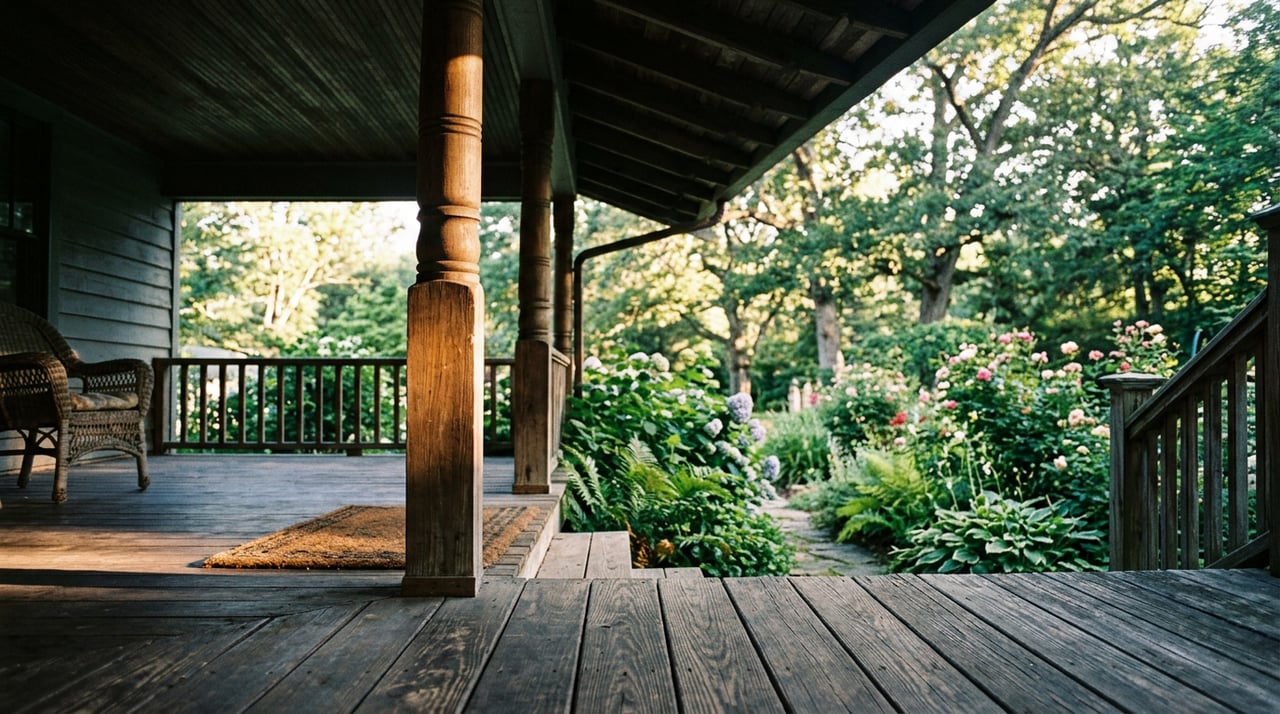
The Neighborhood Built for Porchfest, Long Before Porchfest Existed
September 3, 2026
September 3, 2026
At noon on September 20, the city will close the streets around Gerstle Park to cars, and by early afternoon somewhere between 65 and 75 bands will be playing at once, off two dozen or so front porches, driveways, front yards, and the school playground, to a crowd that organizers expect to number in the thousands. Nobody buys a ticket. Nobody reserves a spot. You just walk, and the neighborhood does the rest.
San Rafael Porchfest has become one of those events that people who don't live in Gerstle Park assume is a marketing invention, something a city tourism office dreamed up. It isn't. It's a volunteer-run afternoon that costs nothing to attend, and the reason it works as well as it does has less to do with enthusiasm than with the shape of the streets it happens on.
The event runs from noon to 5 p.m. and covers a footprint of maybe a dozen blocks. Bands set up on porches, front steps, in yards, and occasionally in the street itself, and the volunteer team spends months mapping the lineup specifically to keep one band's amplifier from bleeding into the next porch's set. The genre range is wide on purpose: folk, gospel, gypsy jazz, funk, indie rock, Latin music, and slots reserved for family and teen bands, so a single block can shift from a string quartet to a salsa outfit within a hundred feet.
There are two rules posted everywhere: no alcohol, and dogs must be on leash. Beyond that, the day runs on food trucks and picnic blankets on the Gerstle Park lawn, and on tip jars and merch tables, since performers agree up front to play for free and rely on the crowd's generosity instead. The event itself isn't free to run. Sponsorships and merchandise sales cover the cost of portable bathrooms, barricades, permits, and security, the unglamorous infrastructure that lets a residential neighborhood absorb a crowd this size without falling apart by 3 p.m.
None of this happened by accident, and none of it is unique to San Rafael. Porchfest as a format started in Ithaca, New York, in 2007, and has since spread to more than 60 towns and cities across the country. San Rafael's version traces back to 2018, when longtime resident Tom Obletz, inspired by a similar event in Napa, pulled together a group that included the Gerstle Park Neighborhood Association and launched the inaugural festival that September. It stuck immediately, and the GPNA has run it every year since, alongside the city.
Here's the part that doesn't show up in the festival's own press materials: Gerstle Park can host an event like this because of how it was subdivided more than 150 years before anyone used the word Porchfest.
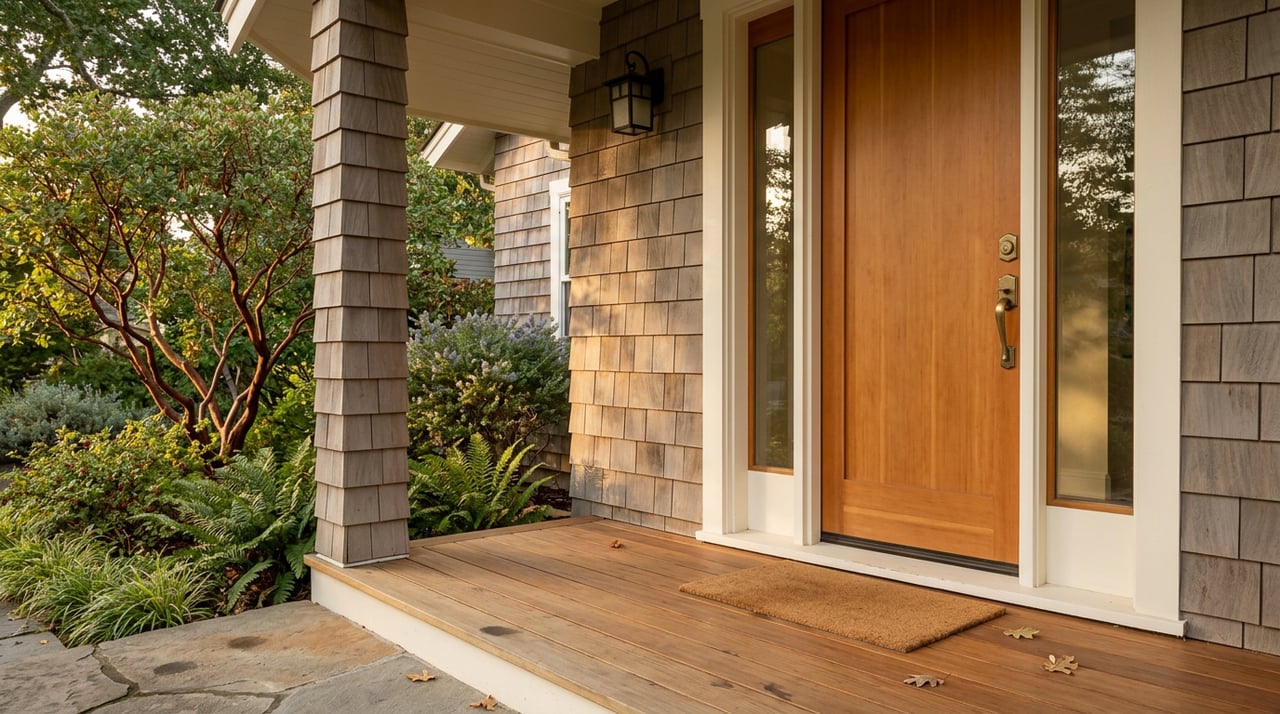
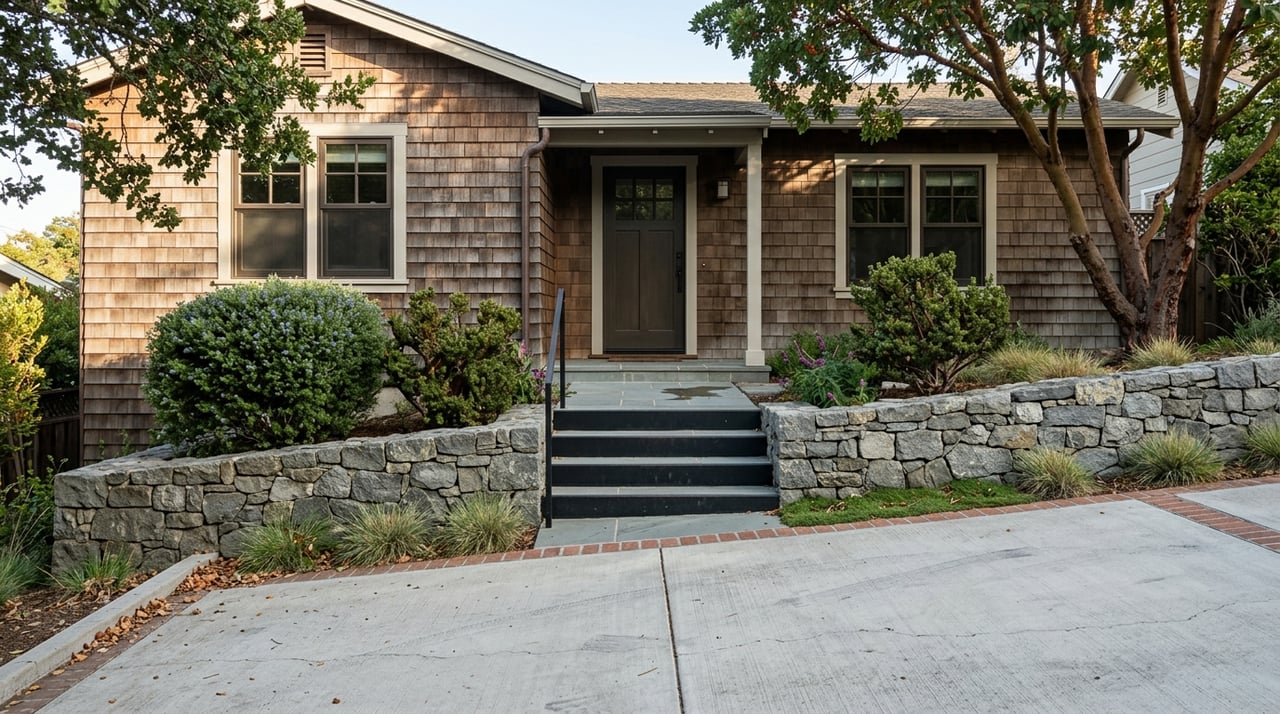
The neighborhood traces its oldest lots to what was called Short's Tract, developed in the 1860s and 1870s by a Kentucky transplant named J.B. Short, and recognized as the first subdivision in San Rafael. Its boundaries are still legible today: First Street to the north, B Street to the east, Woodland Avenue to the south, and undeveloped open space along the western edge. Inside that footprint sit homes like the Italianate cottage at 255 D Street, the two-story house at 127 San Rafael Avenue built in 1879 by a house mover named A.W. Stratton, and the Stick-style Davidson House across the street at 210 San Rafael Avenue, built in 1880. These are close-set, narrow-lot houses with porches that sit near the sidewalk, on streets that were never engineered for through traffic or wide setbacks.
That layout is exactly what makes the sound logistics of Porchfest possible. A festival built around dozens of simultaneous acoustic footprints needs porches close enough together that a crowd can walk from one to the next in a few minutes, on streets narrow enough that closing them to cars doesn't strand anyone. Try to run the same event in a neighborhood of long driveways and set-back ranch houses and the whole format collapses. Gerstle Park's bones were laid down for foot traffic and neighborliness a century before either concept had branding attached to it, and the festival is really just the loudest possible demonstration of a layout that was quietly built for exactly this kind of proximity.
The park itself has its own origin story tied to the same era of local history. Lewis Gerstle, who arrived in the United States from Bavaria in 1845 and came to California during the Gold Rush, rented and then purchased a house on San Rafael Avenue in 1881, along with a five-acre tract. A friend added an adjoining four-and-a-half-acre parcel two years later and built a three-story residence on what is now parkland. That house burned in a 1955 fire, though its guesthouse still stands. In 1930, the Gerstle family donated the land to the city, and it has been San Rafael's public park ever since, the same green space where Porchfest-goers now spread picnic blankets between sets.
It would be easy to treat Porchfest as an isolated spike, a single Sunday that gets outsized attention and then disappears for eleven months. That isn't how the Gerstle Park Neighborhood Association actually operates. National Night Out drew neighbors to the Gerstle Park playground on August 4, and Halloween in Gerstle Park will do the same on October 31. Porchfest sits in the middle of that stretch, not apart from it, which is part of why it runs so smoothly. The same volunteer infrastructure, the same GPNA leadership, and largely the same households show up for all three.
The GPNA itself is worth understanding on its own terms, because it isn't what people often assume. It is explicitly not a homeowners association. Membership is open to anyone who lives in the neighborhood or runs a business there, and its stated purpose is to draw a wide mix of people together to protect the character of a neighborhood that predates most of San Rafael's other residential districts. One longtime resident, writing to organizers after a recent festival, called it the best thing that has taken place in the neighborhood since moving to Gerstle Park in 1990. That kind of response is the product of an association that has spent years building repeatable, low-cost community touchpoints rather than one splashy annual event.
Even the visual identity gets built from the neighborhood itself. The 2026 poster, designed by Katie Kincade Designs, pieces together fragments of actual Gerstle Park houses pulled from the festival's own photo archive into a single composite Victorian home, an image people who live there can look at and recognize their own front steps or porch rail somewhere in the collage.
If you're planning to go on September 20, a few things are worth knowing ahead of time:
The easy version of this story is that a scrappy neighborhood throws a great party once a year. The more accurate version is that a 19th-century subdivision, laid out for foot traffic and front-porch proximity before anyone had a reason to plan for either, turned out to be the ideal stage for a 21st-century music festival, and that a neighborhood association built on open membership rather than restriction has kept that stage in use for National Night Out, Halloween, and everything in between. Porchfest isn't Gerstle Park's one big day. It's the loudest version of a rhythm the neighborhood has been running for years.
If you're curious what else makes a specific Marin block work the way it does, that's the kind of question Falla Associates spends its time answering, block by block, long before anyone is ready to buy or sell.
Stay up to date on the latest real estate trends.
Partner with a team that values trust, results, and a personalized experience from start to finish.
Contact With Our Team To Learn More

FALLA ASSOCIATES
902 Irwin St San Rafael CA 94901 Jennifer Falla Firkins | CA DRE# 01255172 Alva Falla | CA DRE# 00628712