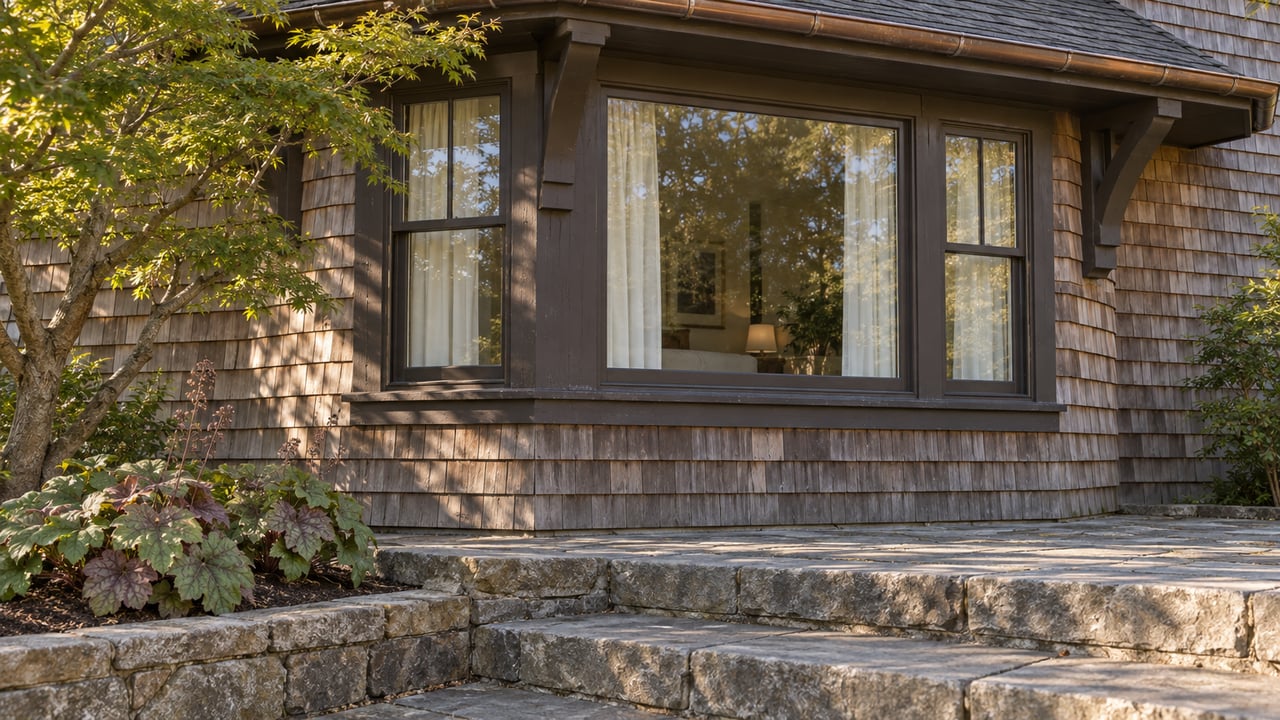
San Rafael Downtown History Walking Tour: Fourth Street’s Historic Stops
October 8, 2026
More than a year ago, staff from the Marin History Museum took a walking tour in Petaluma. The guides were local history fans in period clothing. Partway through, the group found a QR code next to a historic building, and scanning it pulled up photographs, background and an audio story about the site. "It was an eye-opener for me," said Lori Deibel, the museum's research librarian. "I thought to myself, we could do this!"
At the time, the technology cost too much to be practical. That changed after the City of San Rafael approached the museum about working together on educational projects. Now Fourth Street has its own version, called "San Rafael Historic Sites." It runs in English and Spanish on the STQRY app at cityofsanrafael.stqry.app. Walk the route and you'll find that most of San Rafael's early history never left downtown. It's still standing on Fourth Street, mostly in buildings that now do different work.
The museum built the tour by walking downtown and matching buildings to photos in its archive. "I discovered so many buildings that still look exactly the same," Deibel said. The Marin Independent Journal summed up the result in its story on the launch: a jewelry store in a former car dealership, offices on the site of a grand courthouse, and a historic bank that is set to reopen with bartenders inside.
The starting set has about two dozen stops. The museum lists 25, the city's event announcement said 24, and the IJ described it as more than 20. The route runs from the Union Depot, where the SMART train stops today, to Fourth and D streets, where one of San Rafael's early newspapers was printed. The creators want it to take about an hour, and downtown is compact enough to cover much of it on foot.
Starting at the depot and heading west keeps the addresses in order. Published coverage names these stops along the way:
The rest of the stops are in the app. The full list hasn't been published anywhere else yet, so the app is the place to see the complete route.
The stops follow a pattern. The depot went from passenger rail to a bus transit center and then back to rail. The car dealership became a jewelry store. The courthouse came down and offices went up. At Fourth and C, a house gave way to a bank, and the bank now has a new tenant on the way.
Walter Gonzalez Valdez, the management analyst in the city manager's office who led the project for the city, described the Bank of Italy building this way:
"The Bank of Italy helped finance the construction of the Golden Gate Bridge, which speaks to San Rafael's contribution to the region. I love that the building has served so many different uses over the years; it reflects how adaptable we are as a city to our community's changing needs."
The building's next use is The Twelfth, a women's sports bar. The IJ said in September that it "will soon reopen" under that name. The Downtown San Rafael Business Improvement District had earlier targeted summer 2026 for the opening. We haven't seen an opening date confirmed as of early October, so check before planning to stop in for a drink. Either way, you can stand outside the 1930 facade, open the app and see the same corner in the 1930s.
Gonzalez Valdez also explained why the project matters: "We often learn history through a wider lens — the Bay Area, the state or the country — but local history is just as important." On Fourth Street, local history is everyday downtown: the store where you had a ring resized, the station where you catch the train.
San Rafael already has historic plaques, and the IJ explained why they fall short. The metal ones set into sidewalks are easy to miss, many have weathered badly, and some have been painted over. Putting new markers into sidewalks is also expensive and complicated. The app works anywhere: scan a QR code, or just stand near a site, and its profile and photos come up.
The signs are still coming. The city plans highly visible QR signs on poles, with window stickers on participating businesses where poles won't work. The museum says to look for them "in the fall of 2026." If you walk the route this month and find no signs, open the app link before you go. The tour works fine without them.
The tour came out of a deal signed in September 2025. The museum got a three-year, no-rent contract for the historic Boyd Gate House, and in return agreed to put up quarterly exhibits at City Hall, host public history events and create a virtual walking tour. The people behind it have deep experience. Marcie Miller, the museum's education coordinator and one of the tour's co-creators, has led walking tours for nearly 15 years and still draws groups of almost 20 people per tour.
The museum started on Fourth Street because that's where most pedestrians walk. "We would eventually like to include locations all over the city," Deibel said. The museum asks for suggestions for future signs at [email protected]. If you know the history of a building on your block, now is a good time to send it in.
The tour ends at Fourth and D. A few blocks farther west, at 1574 Fourth St., is another recent change of use. The Kitchen Table closed in June, and in August chef Alexander Alioto reopened the corner as Alioto's Focacceria, a fast-casual Italian deli open daily from 10 a.m. to 6 p.m. If you start at the depot late in the morning and stop to read at each site, you'll reach the deli around lunchtime.
If you're showing visiting family around this fall, here's the simplest plan. Take the SMART train to the downtown San Rafael station, open the app at Union Station, walk west past 831 and 1300 Fourth, and finish with lunch at 1574.
The tour shows how much a building's past adds to its present, and that goes for houses too. If you own a home with its own story in San Rafael, Falla Associates can tell you what that history and condition mean in today's market. Get a Free Home Valuation, and we'll walk you through the numbers street by street.
Stay up to date on the latest real estate trends.
Partner with a team that values trust, results, and a personalized experience from start to finish.
Contact With Our Team To Learn More
FALLA ASSOCIATES
902 Irwin St San Rafael CA 94901 Jennifer Falla Firkins | CA DRE# 01255172 Alva Falla | CA DRE# 00628712